Directions Preheat Toaster Oven to 400°F
In a pre-heated toaster oven, BAKE (do NOT toast) the waffle directly on the wire rack. The purpose is to crisp the waffle throughout, not just on its surface. In my toaster oven, this takes about seven minutes.
Serve
Topped with Ice Cream, flavor of your choice
Enhanced with toppings, as may be desired
This recipe, the one our Mom used, produces, hands-down, the best-tasting chocolate sundae syrup I have ever enjoyed. I've been making it, myself, for nearly a half century. This sauce has a rich chocolate flavor and, despite the sugar, still retains a hint of dark chocolate overtones. And it's pretty simple to make.
Ingredients 1 Cup Hershey's Unsweetened Cocoa Powder 4 Cups Granulated Sugar ¼ Teaspoon Salt
2 Cups Water 1 Teaspoon Vanilla
Directions
1. In a suitably-sized saucepan, combine first three (dry) ingredients thoroughly. Mixing the powder into the sugar helps it to dissolve when the water is added in the next step.
2. Add Water and Vanilla and stir to mix well.
3. Heat to boiling, mixing continuously.
4. Simmer for three minutes, stirring often.
Serve
Hot or cold, over ice cream or whatever comes to mind
Mix into hot or cold milk
While I am a big fan of noodles and pasta in soups and sauce dishes, I have never much cottoned to pasta salads. Macaroni salad, to me, has always just ... felt sad. Still, there has always been one pasta salad that I liked. Not just liked, but really liked: Sesame Noodles.
There are a wide variety of recipes for sesame noodles. Many use peanut butter or a similar nut or vegetable base. This recipe does not.
Ingredients 2 3-ounce packages of Ramen Noodles (optional flavor choice) 2 Tablespoons of toasted Sesame Oil ¼ Cup Soy Sauce 2 Tablespoons Brown Sugar (optional light, dark, or even
granulated sugar) 2 Cups Water (Organic, non-GMO, gluten-free water is best.)
Preparation
A. In a saucepan add 1 Ramen Flavor Packet to 2 Cups of water.
B. Bring water to boil.
C. (Optional) Break up noodle blocks. (Best done before you open the wrapper.)
D. Add 2 packages of Ramen Noodles to boiling water. Be sure all noodles are in direct contact with water (the reason you might want to break up the noodle blocks). Boil for 3 Minutes.
E. In a bowl, mix Brown Sugar, Soy Sauce, and Sesame Oil together.
F. Add cooked Noodles to Sugar-Soy mixture, stir together.
G. (Optional) Sprinkle with toasted Sesame Seeds.
Enjoy warm.
Wikimedia Commons
For a cold salad, prepare as above, adding 2 Tablespoons Vegetable Oil and 1 Tablespoon Rice Vinegar to the Soy-Sugar Mix. Chill prepared noodles, covered, in refrigerator.
This dish has become a favorite, recently. It's a variation of a recipe from the Food Wishes channel on YouTube. There, Chef John presents it as an oven-roasted, open skillet that's started on the stove top. I discovered that I liked it better when I finished it, covered, and all on the stove top, no oven. It depends on how you like it. In the oven, it's finished crispy and caramelized, my version is moist and tender, with some caramelization on the meat. And it's also a bit easier.
To keep it simple, go ahead and watch the Food Wishes recipe linked above, it's only seven-and-a-half minutes, as most of Chef John's presentations are brief and practical. Then I'll list what I do that's different.
1. I use a 12-inch Cook's Standard stainless steel fry pan with dome lid (available on Amazon). It could be prepared in a cast iron or non-stick skillet, but it won't develop a flavorful fond.
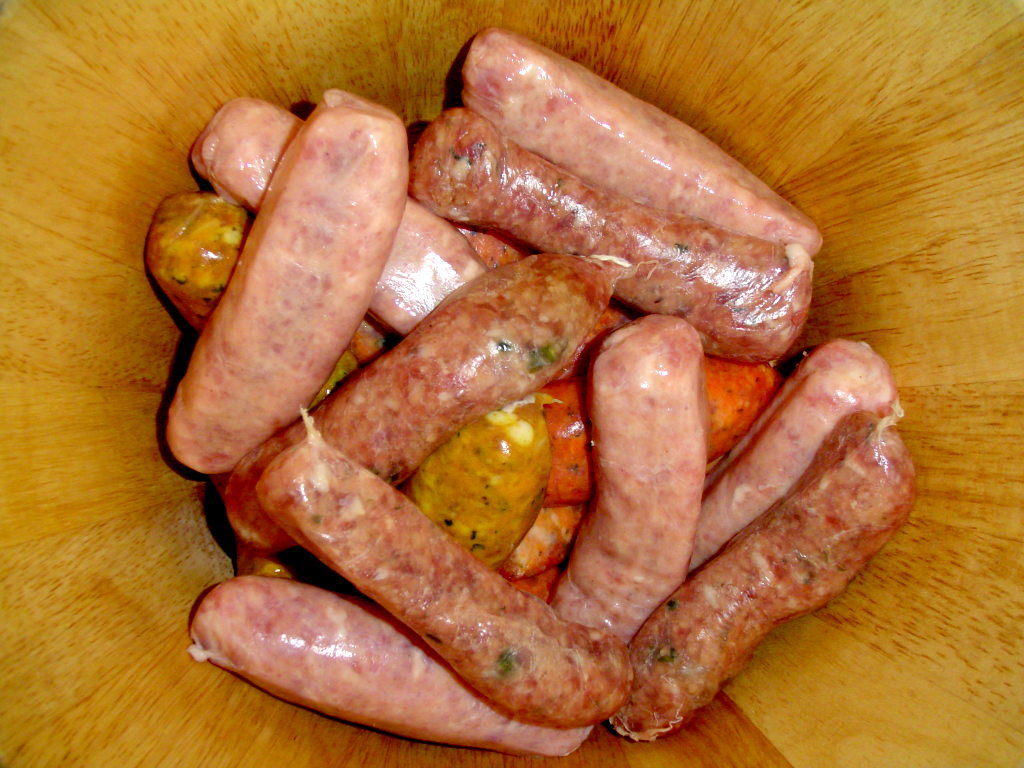
2. On MEDIUM, start with hot oil or fat (chicken, bacon, lard, whatever) in the pan. Add the chicken thighs skin side UP in the center of the pan, then add any uncooked (fresh, not smoked) sausage¹ around the thighs.
3. Let that meat brown, uncovered, on one side while cutting up the peppers, onions and potatoes².
4. Turn all the browning meat over, thighs skin DOWN. Add any cooked (smoked) sausage then distribute the veggies, keeping the meat on the bottom of the pan to maximize browning.
5. I season liberally with Lawry's, black pepper, granulated garlic, marjoram, sage, summer savory, parsley and a little rosemary and basil. A bay leaf is optional, but it's not a flavor I like. And a little cayenne, if I'm using sweet (non-spicy) peppers.
6. Brown 5 minutes on MEDIUM.
7. COVER, turn to LOW for 40 minutes.
8. Serve ¹ I've used fresh and smoked kielbasa, bratwurst, hot links, andouille, both sweet and hot Italian sausages and cut-up country-style ribs, usually in combinations of two types. The rib meat didn't bring enough flavor whereas the chicken seems to absorb it. The sausage is easier to manage if I wait to cut it up until after cooking.
² I prefer the poblano (aka, ancho) peppers from my small hydroponic garden, but I've also used red bell peppers and canned diced green chiles. I've discovered that I can never have too much onion and it's nearly the same with potatoes. But maybe that's just me.
For many years, I figured that the perceived differences in the typical cooking and table sugars in the U.S. were primarily a result of color profiling that had its roots in the apartheid policies of former South African regimes, in the caste system of the Indian subcontinent, or in the so-called Jim Crow practices in America. I reckoned that brown sugars were simply looked down upon because of their color, and bigotry often led them to react by becoming hardened.
Imagine my surprise upon learning that, in the vast majority of commercial products available in America, all three sugars—white, light brown, and dark brown—are simply refined white sugar, with the latter two having different amounts of molasses added back. While the sugar refining process does pass through dark and light brown stages as the molasses are removed, commercial producers prefer to add precise amounts of molasses back to the white sugar to help assure consistent products. Turns out bigotry, apartheid, and castes having nothing to do with it. Go figure.
Sugar beets in cultivation
What's more, the reason brown sugars can become hardened is because the moisture in the molasses syrup that has been added can evaporate, leaving the sugar crystals as a solid, self-adherent mass. However, if you're desperate, there are some temporary remedies to rock-hard brown sugar, which I'll get to later.
Harvested sugar beets
Sugar cane in the field
Cut cane, ready for the rolling mill
Most sugar in the U.S. is refined from sugar cane and sugar beets. Those, and many other plants, produce a sugar called sucrose. According to one source (realbakingwithrose.com), light brown sugar is usually 3.5% molasses, while dark brown has about 6.5% molasses added back to the refined white sugar product.
There are some obvious and some not-so-obvious differences in the various sugars. Most apparent are color and taste, both of which can show up in baked products. Molasses also brings some slight acidic features as well as more moisture. This can contribute to a bit more rise in a baked cookie, while light brown and white sugar will see successively more spread to the cookie, according to Serious Eats.
Finally, Professor's House suggests putting a half-pound of hardened brown sugar, covered with two wet (not dripping) paper towels, in a microwave-safe bowl sealed with plastic wrap. Nuke it for a couple minutes or so, then use a fork to stir and separate the sugar (CAUTION: sugar can stay very hot for an extended period). They suggest that the treated sugar not be stored but used immediately. Sweet!

 I enjoy the standard waffle cone as much as I do the ice cream. This recipe emphasizes that delicious cone taste.